Practical home care
Schnauzer grooming: Hand Stripping, beard, legs and home care
In brief: schnauzer care becomes simpler when you treat body coat, undercoat, beard and leg furnishings as four separate jobs. Each has its own rhythm; most home-care problems start when wet beard or leg hair is left until the day before the appointment.

Body coat: breed alone does not choose the method
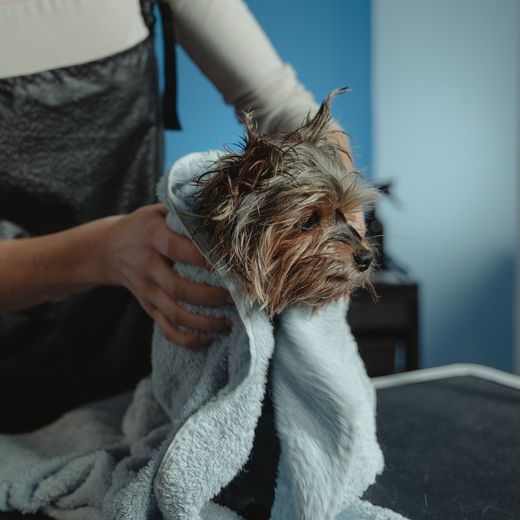
After a wet walk, the paws may be wiped while the beard and longer leg furnishings remain damp. Without gentle drying and a layer-by-layer check, those areas can begin to tangle.
Hand Stripping is often associated with schnauzers, but the actual coat must be checked first. Outer-coat maturity, undercoat density and previous clipping all matter. The plan may be layered maintenance, a gradual transition or an adapted technique. The guide to how Hand Stripping works explains the fundamentals of coat maturity and the process.
Daylight photographs of the back and both flanks are useful for an initial view, but the final plan follows a hands-on assessment. A filtered portrait or a wet coat can hide the detail that matters most.

Beard: a short routine after food and water
Blot the beard after drinking or wet food instead of rubbing it. Feel for small clumps near the corners of the mouth, then comb from the ends towards the roots. Hold the section above a snag so the comb does not pull the skin.
A sudden skin change, a strong new smell, pain or marked discomfort should not be diagnosed through cosmetic grooming. Seek veterinary advice if you notice these signs.

Legs: check in layers
Long leg furnishings tangle readily in the armpits, under a harness and after wet walks. The surface can look tidy while a knot sits closer to the skin. Make a parting with your hand, comb the lower layer and work upwards. Do not cut a dense mat close to the skin yourself if you cannot clearly see its boundary.
Five places for a weekly check
- beard and mouth corners;
- armpits and harness contact points;
- front and rear legs, layer by layer;
- belly and frequently damp areas;
- paw pads, hair between them and nail length — ask a professional if you are unsure how to work safely.
Before the salon visit
Note the last stripping, clipping and bath dates. Mention touch-sensitive areas and show existing tangles rather than trying to force them out at the last minute. A calm walk is usually more helpful than an exhausting brushing session.
Ask before bathing immediately before the appointment. The right preparation depends on the current coat and the work planned.
A rhythm you can maintain
Six to twelve weeks is a common reference for maintained wire coat, but it is only a starting point. Beard and legs need attention between visits; the body should be judged by coat maturity. A simple routine that happens is better than a perfect schedule that does not.
Continue with Hand Stripping versus clipping, or send photographs for a Hand Stripping consultation in Ljubljana.
Frequently asked questions
How often should I comb the beard?
Adapt to length, food and tendency to tangle. A quick check after wet meals and a thorough gentle comb several times a week is a practical start.
Should I bathe my schnauzer before stripping?
Ask the groomer first. Preparation depends on the coat’s maturity, condition and the agreed session.
What if the legs are heavily matted?
Do not pull harder. A photograph supports only an initial view; after an assessment, discuss what can be safely detangled and when adapting the shape is more comfortable.
Does grooming differ between a Miniature and a Standard Schnauzer?
The main care areas are the same: body coat, undercoat, beard and leg furnishings. The amount, frequency and method depend on more than size, including coat density and maturity, the chosen outline, grooming history and how the dog responds to the process.